
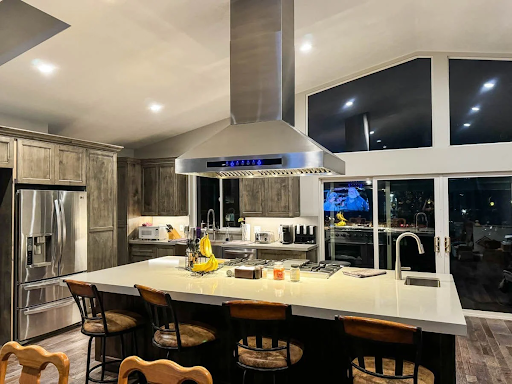
A well-designed kitchen should be both beautiful and functional, and proper ventilation plays a significant role in achieving that balance. Cooking releases smoke, grease, steam, odors, and airborne particles that can affect indoor air quality and leave residue on cabinets, walls, and ceilings. Installing the right range hood vent helps remove these contaminants, creating a cleaner and more comfortable cooking environment.
Whether you’re remodeling your kitchen or replacing an outdated ventilation system, choosing the right range hood vent involves more than selecting a style that matches your cabinets. Factors such as airflow capacity, kitchen size, mounting type, ducting options, and cooking habits all influence performance. Proline offers a wide selection of wall-mounted, under-cabinet, island, insert, and outdoor range hoods in multiple sizes and CFM ratings, with both ducted and convertible ductless options available for different kitchen layouts.
Why a Range Hood Vent Is Important
A quality ventilation system improves both kitchen comfort and indoor air quality.
Its primary functions include:
- Removing smoke
- Eliminating cooking odors
- Reducing airborne grease
- Venting excess heat
- Controlling moisture
- Improving air circulation
Effective ventilation also helps protect kitchen finishes by reducing grease buildup over time.
Types of Range Hood Vents
Different kitchen layouts require different ventilation solutions.
Common options include:
Wall-Mounted Range Hoods
Installed against a wall above the cooktop, these models provide powerful ventilation while serving as a design feature.
Under-Cabinet Range Hoods
These fit beneath existing cabinets, making them ideal for kitchens with limited wall space.
Island Range Hoods
Designed for cooktops installed on kitchen islands, these hoods are suspended from the ceiling to provide effective ventilation.
Insert Range Hoods
Insert models are built into custom cabinetry, offering a seamless appearance while maintaining strong airflow. Proline’s collection includes wall-mounted, under-cabinet, island, insert, and outdoor models to accommodate various kitchen designs.
Ducted vs. Ductless Systems
One of the first decisions when choosing a ventilation system is selecting between ducted and ductless operation.
Ducted Systems
Advantages include:
- Exhaust smoke outdoors
- Better odor removal
- More effective grease extraction
- Higher airflow efficiency
Ductless Systems
Benefits include:
- Easier installation
- Suitable where exterior venting isn’t possible
- Air recirculation through charcoal filters
Many modern range hoods can be configured as either ducted or ductless using optional conversion kits.
Understanding CFM Ratings
CFM (Cubic Feet per Minute) measures how much air a range hood can move.
General guidelines include:
- Lower CFM for light cooking
- Medium CFM for everyday cooking
- Higher CFM for frequent frying or high-heat cooking
- Professional-grade CFM for large ranges and outdoor kitchens
Selecting an appropriate airflow rating helps ensure efficient ventilation without unnecessary energy use.
Choosing the Correct Size
The width of your range hood should generally match or exceed the width of your cooking surface.
Popular sizes include:
- 24-inch
- 30-inch
- 36-inch
- 42-inch
- 48-inch
- 60-inch
Larger cooking surfaces often benefit from wider hoods that capture smoke and steam more effectively.
Features Worth Considering
Modern range hoods often include features that improve convenience and performance.
Look for:
- Multiple fan speeds
- LED lighting
- Stainless steel construction
- Dishwasher-safe baffle filters
- Quiet motor operation
- Digital controls
- Convertible ventilation options
These features contribute to easier maintenance and a better overall cooking experience.
Installation Tips
Proper installation is essential for achieving maximum performance.
Keep these recommendations in mind:
- Follow manufacturer clearance guidelines.
- Use appropriately sized ductwork.
- Minimize sharp duct bends.
- Ensure secure mounting.
- Seal duct connections properly.
- Verify adequate airflow after installation.
Professional installation can help optimize performance and ensure compliance with local building codes.
Maintaining Your Range Hood Vent
Routine maintenance helps preserve airflow and extend the life of your ventilation system.
Recommended practices include:
- Clean grease filters regularly.
- Replace charcoal filters when required.
- Wipe exterior surfaces frequently.
- Inspect ductwork periodically.
- Check fan operation.
- Clean light covers.
Regular maintenance keeps the system operating efficiently while maintaining kitchen cleanliness.
Common Mistakes to Avoid
Many homeowners reduce ventilation performance by making avoidable errors.
Common mistakes include:
- Choosing an undersized hood
- Ignoring CFM requirements
- Delaying filter cleaning
- Installing incorrect duct sizes
- Blocking airflow
- Skipping routine maintenance
Avoiding these issues helps ensure consistent ventilation performance for years.
Conclusion
Choosing the right range hood vent is essential for maintaining cleaner indoor air, reducing cooking odors, and protecting your kitchen from grease and moisture buildup. By selecting the appropriate hood type, airflow capacity, installation method, and maintenance routine, homeowners can enjoy improved comfort and long-lasting ventilation performance. For larger cooktops and professional-style kitchens, 42 inch range hoods provide expanded coverage and powerful ventilation, making them an excellent choice for homeowners who frequently cook or require enhanced airflow for larger cooking surfaces. Investing in a quality ventilation system also contributes to a healthier and more enjoyable cooking environment.
