
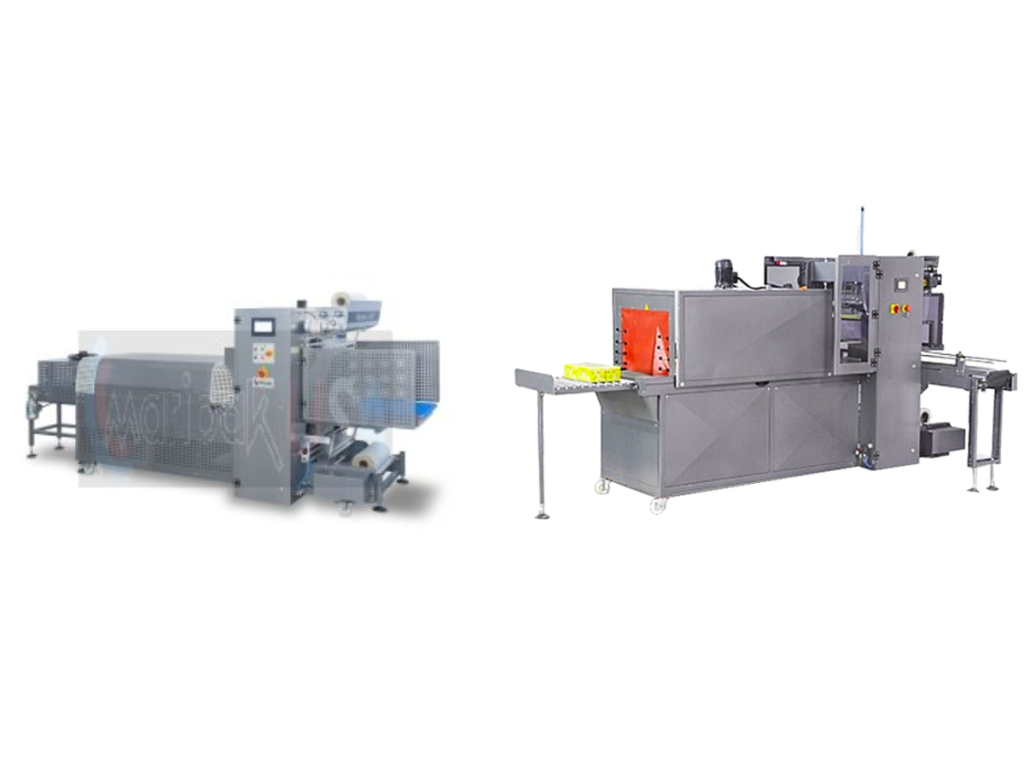
Industrial packaging operations require equipment that can handle demanding production schedules while maintaining consistent package quality. When products need to be grouped, protected, or prepared for transportation, shrink wrapping can provide a practical packaging solution. A shrink wrap machine industrial system can automate film application, sealing, and shrinking, helping manufacturers reduce repetitive manual work and maintain a more consistent packaging process.
What Is an Industrial Shrink Wrap Machine?
A shrink wrap machine industrial system is packaging equipment designed for high-volume or demanding applications where products are wrapped in plastic film and exposed to controlled heat. The heat causes the film to contract around the product, creating a close-fitting outer package.
Industrial systems can include several components, such as product conveyors, film dispensers, sealing mechanisms, shrink tunnels, and automated controls. The exact configuration depends on the product, film type, production volume, and desired level of automation.
Unlike small packaging machines designed for occasional use, industrial systems are generally built around continuous production requirements. They may also be integrated with other equipment to create a complete packaging line.
How Does Industrial Shrink Wrapping Work?
The process typically begins with products entering the packaging system through an infeed conveyor. Depending on the application, products may be individually wrapped or grouped into bundles.
Film is then positioned around the product. A sealing system closes the film and creates the initial package enclosure. The wrapped product moves into a heat tunnel, where controlled hot air causes the film to shrink.
Temperature, airflow, conveyor speed, film characteristics, and product dimensions all influence the finished package. Incorrect settings can result in wrinkles, loose film, weak seals, or excessive shrinkage.
For this reason, an industrial shrink-wrapping system needs to be configured according to the specific products and packaging materials being processed.
What Types of Industrial Shrink Wrapping Systems Are Available?
Different industrial applications require different machine configurations.
PE Wrapping Systems
Polyethylene, or PE, wrapping systems are commonly used for heavier products and multipack applications. PE film can provide strength and durability, making it suitable for products that require robust outer packaging.
Industrial PE wrapping equipment can be configured for continuous sleeve wrapping, product bundling, and other applications where multiple items need to be grouped together.
Side-Sealing Systems
Side sealers create a continuous longitudinal seal as products move through the machine. They can be particularly useful for products with varying lengths and production lines requiring continuous movement.
Automated side-sealing systems can incorporate conveyors, film handling, sensors, and controlled sealing mechanisms to support high-volume packaging.
L-Sealing Systems
L-sealers use an L-shaped sealing bar to cut and seal film around products. They are available in different automation levels and can be paired with heat tunnels for complete shrink packaging.
The appropriate L-sealer depends on product dimensions, production requirements, film specifications, and desired automation.
Heat Shrink Tunnels
Heat tunnels perform the final shrinking stage. They use controlled heat and airflow to contract the film around the product.
Tunnel size, temperature range, airflow, and conveyor speed should be matched to the film and product being packaged.
What Products Can Be Industrially Shrink Wrapped?
A shrink wrap machine industrial system can be used for many different products and industries. Applications can include consumer goods, building materials, printed products, household items, industrial components, retail multipacks, and products that need to remain grouped during transportation.
PE wrapping is particularly useful when packages need additional durability. Multiple units can be combined into a single bundle, making them easier to handle and move through distribution channels.
However, not every product requires the same machine configuration. Product weight, dimensions, shape, surface characteristics, and required package strength should be considered before selecting equipment.
What Are the Benefits of Industrial Shrink Wrapping?
Industrial shrink wrapping can provide several operational benefits when appropriately configured.
Consistent Packaging
Automated equipment can maintain repeatable film application and sealing parameters, helping reduce variation between packages.
Higher Throughput
Industrial machines can process products continuously, making them suitable for production environments where packaging speed is important.
Reduced Manual Handling
Automation can reduce repetitive wrapping and sealing tasks, allowing employees to focus on other production activities.
Improved Product Grouping
Shrink film can keep multiple products together as a bundle, simplifying handling, storage, and transportation.
Flexible Packaging Options
Different film types and machine configurations allow businesses to select packaging approaches based on product characteristics and production requirements.
How Do You Choose the Right Industrial Machine?
Selecting a shrink wrap machine industrial solution requires careful evaluation of the complete packaging process.
Product Dimensions
Determine the minimum and maximum product length, width, and height. Also consider product weight and whether items will be individually packaged or grouped.
Production Volume
Calculate the required packages per hour or shift. Equipment should provide enough capacity for current production while allowing reasonable room for future growth.
Film Type
Film material, thickness, width, strength, and shrink characteristics affect machine selection. PE film, for example, may be appropriate for heavier-duty bundling applications, while other films may be better suited to retail products.
Automation Requirements
Determine how much operator involvement is appropriate. Semi-automatic systems may provide flexibility for varied products, while fully automatic systems can be more suitable for continuous high-volume production.
Line Integration
Consider how the equipment will connect with existing conveyors, feeders, bundling systems, labeling equipment, and downstream handling machinery.
Why Is Film Selection Important?
Film is not simply a consumable material; it is an integral part of the packaging system. The film must be compatible with the sealing mechanism and heat tunnel.
Film thickness affects strength and material consumption. Shrink characteristics affect the temperature and dwell time required in the tunnel. Film width must also accommodate the product dimensions without creating unnecessary waste.
Using inappropriate film can cause poor seals, tearing, wrinkles, or inconsistent shrinkage. Testing film with the selected equipment before full-scale production can help identify suitable operating parameters.
How Does Machine Speed Affect Production?
Machine speed is an important consideration, but the highest rated speed does not necessarily produce the highest real-world output.
Actual throughput can be affected by product spacing, product dimensions, operator loading, film changes, sealing time, tunnel dwell time, and downstream equipment.
For example, a fast wrapping system may become ineffective if products cannot be supplied to the machine at a consistent rate. Similarly, a high-speed sealer can create a bottleneck if the shrink tunnel cannot process packages at the same rate.
A balanced packaging line is therefore more important than maximizing the speed of one component.
What Maintenance Does Industrial Equipment Require?
Regular maintenance helps maintain reliable machine performance. Operators should inspect conveyors, sealing components, film paths, heating elements, sensors, controls, and other mechanical components according to the equipment manufacturer’s recommendations.
Cleaning is also important. Film residue, dust, and debris can interfere with sealing, film movement, and airflow.
Operators should monitor package quality for signs of equipment problems. Changes such as loose film, inconsistent seals, or unusual wrinkles may indicate incorrect temperature, conveyor speed, film tension, or machine alignment.
When Is Industrial Shrink Wrapping Most Useful?
A shrink wrap machine industrial system is particularly valuable when packaging volumes are substantial, products require consistent wrapping, or manual packaging has become a production bottleneck.
It can be especially useful for manufacturers and distributors that need to bundle products, stabilize packages for transportation, or maintain consistent packaging across large production runs.
However, industrial automation is not automatically the best solution for every business. Companies with low production volumes or highly variable products may find simpler equipment more practical.
Conclusion
A shrink wrap machine industrial system can improve packaging consistency, throughput, product grouping, and operational efficiency when it is properly matched to the application. Different configurations, including PE wrappers, side sealers, L-sealers, and heat tunnels, address different packaging requirements. Before investing, businesses should evaluate product dimensions, production volume, film specifications, automation needs, available space, and integration with existing equipment. Maripak USA can be researched as one industry resource when comparing industrial PE wrapping systems and related shrink-packaging equipment. Selecting equipment around the complete packaging workflow can help manufacturers build a reliable system that supports current production requirements and future operational growth.
