
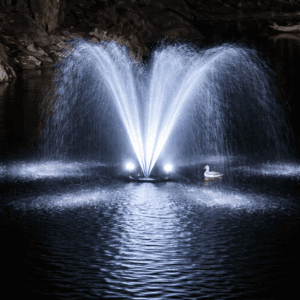
A well-designed pond adds beauty and tranquility to any outdoor space, but maintaining clean, healthy water requires continuous circulation. Without proper movement, ponds can become stagnant, encouraging algae growth, unpleasant odors, mosquito breeding, and low oxygen levels that affect fish and aquatic plants. Installing a floating water fountain is one of the most effective ways to improve water quality while creating a visually stunning centerpiece.
A floating water fountain sits on the surface of the pond and continuously circulates water through decorative spray patterns. This movement promotes oxygen exchange, supports a healthier aquatic ecosystem, and enhances the overall appearance of residential, commercial, and recreational ponds. Modern floating fountains are available in multiple horsepower options and often include interchangeable spray nozzles, floating platforms, debris protection, mooring ropes, and optional LED lighting for nighttime displays.
What Is a Floating Water Fountain?
A floating water fountain is a self-contained fountain system designed to float on the water’s surface while pumping water upward through decorative nozzles. As the water falls back into the pond, it increases circulation and aeration throughout the water body.
These fountains are commonly installed in:
- Residential ponds
- Farm ponds
- Decorative lakes
- Golf courses
- Community parks
- Commercial landscapes
- Resorts and recreational properties
Because they float, these fountains automatically adapt to changing water levels without requiring permanent installation.
Benefits of Installing a Floating Water Fountain
A floating fountain offers numerous environmental and visual advantages.
Some of the primary benefits include:
- Improves water circulation
- Increases dissolved oxygen
- Reduces stagnant water
- Supports healthier aquatic ecosystems
- Enhances landscape aesthetics
- Produces soothing water sounds
- Helps discourage mosquito breeding
Continuous water movement contributes to cleaner water while creating an attractive focal point for any outdoor setting.
How Floating Fountains Improve Pond Health
Healthy ponds depend on proper water circulation.
A floating fountain helps by:
- Promoting oxygen exchange
- Improving water movement
- Reducing stagnant zones
- Supporting beneficial bacteria
- Creating healthier conditions for fish and aquatic plants
Better circulation also helps maintain more balanced water conditions throughout the pond.
Choosing the Right Fountain Size
Before selecting a fountain, consider several important factors.
These include:
- Pond size
- Water depth
- Desired spray height
- Aeration requirements
- Available electrical supply
- Decorative preferences
Choosing the correct horsepower ensures efficient operation while maximizing both water quality and visual appeal.
Why a 3/4 HP Pond Fountain Is an Excellent Choice
A 3/4 HP pond fountain is ideal for medium to large ponds that require greater circulation and more impressive water displays.
Its advantages include:
- High water flow capacity
- Enhanced oxygenation
- Wide spray coverage
- Suitable for larger ponds
- Reliable continuous operation
- Attractive multi-pattern displays
Many 3/4 HP systems feature a 6,600 GPH pump, a 100-foot electric cord, five interchangeable spray nozzles, a durable floating base, a debris protection bag, and optional LED lighting kits for nighttime illumination.
Installation Tips
Most floating fountains are designed for quick and straightforward installation.
For optimal performance:
- Position the fountain near the center of the pond.
- Secure it using the supplied mooring ropes.
- Connect it to a properly protected electrical outlet.
- Ensure the pump remains free from debris.
- Follow the recommended water depth guidelines.
Correct installation helps maximize efficiency while extending the lifespan of the equipment.
Maintenance Best Practices
Routine maintenance helps keep a floating fountain operating at peak performance.
Recommended maintenance includes:
- Cleaning the pump intake
- Inspecting spray nozzles
- Removing leaves and debris
- Checking electrical connections
- Inspecting mooring ropes
- Cleaning the floating platform
Regular inspections reduce wear and help prevent unexpected performance issues.
Features to Look For
When comparing floating fountains, evaluate features such as:
- Horsepower
- Pump capacity
- Spray pattern options
- Energy efficiency
- LED lighting compatibility
- Weather-resistant construction
- Warranty coverage
Selecting a fountain with these features helps ensure dependable long-term performance.
Where Floating Water Fountains Work Best
Floating fountains can enhance many different types of water features.
Popular applications include:
- Private backyard ponds
- Estate lakes
- Business entrances
- Hotels and resorts
- Public parks
- Residential communities
- Agricultural ponds
Their versatility makes them suitable for both decorative and functional purposes.
Conclusion
A floating water fountain is an excellent investment for improving pond health while creating an attractive landscape feature. By increasing water circulation, enhancing oxygen levels, and reducing stagnant conditions, these fountains help maintain cleaner water and support healthier aquatic ecosystems. For medium and large ponds that require stronger aeration and impressive water displays, a 3/4 HP pond fountain offers an ideal combination of power, efficiency, and long-term reliability. With proper installation and regular maintenance, a floating fountain can provide years of reliable performance and visual enjoyment.
