
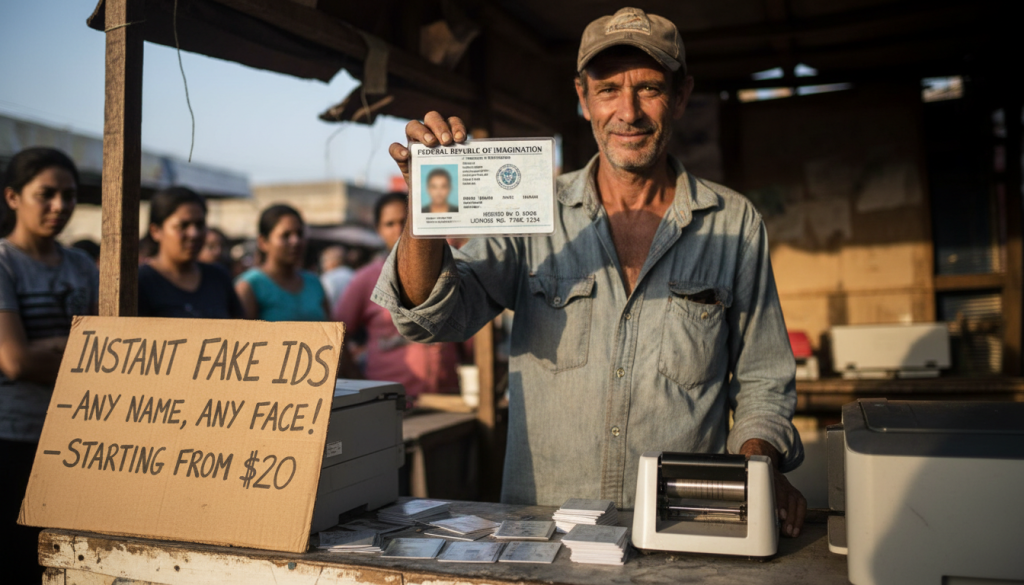
The rapid advancement of printing technology and digital verification has created a dual-edged sword in the modern era. As security features on official documents become more sophisticated—incorporating laser-perforated images, tactile micro-text, and multi-layered polycarbonate materials—the demand for high-fidelity replicas for the film, theatrical, and security-testing industries has similarly evolved. For professionals and enthusiasts in these sectors, the challenge isn’t just finding a product; it’s finding a source that adheres to the highest standards of craftsmanship and reliability.
The Shift Toward “Trust-Based” Sourcing
In a landscape often clouded by misinformation, the “vouch” system has become the gold standard for vetting quality. Whether you are a production manager sourcing props for a high-budget cinematic project or a security consultant conducting penetration tests on corporate premises, where you source your materials matters. The industry has moved away from the “wild west” era of the early internet toward a more structured, community-vetted approach.
Central to this movement is the reliance on authoritative directories. Platforms like fakeidvendors.net have become essential benchmarks, providing a centralized hub for those seeking a verified vendor list. These resources are critical because they filter out the noise, ensuring that users interact with providers who have a proven track record of material accuracy and delivery consistency.
The Anatomy of a High-Quality Replica
What separates a mediocre novelty item from a professional-grade security replica? In 2026, the criteria have narrowed down to three technical pillars:
- Material Integrity: Traditional PVC is largely a thing of the past for high-end applications. The industry standard has shifted to Teslin and Polycarbonate. These materials respond differently to heat and pressure, providing the “bend test” flexibility and the characteristic acoustic “drop test” sound that professionals look for.
- Optical Variable Devices (OVDs): This includes holograms and Kinegrams that appear to move when the card is tilted. Achieving the correct “flash” and color shift requires precision machinery that goes beyond standard desktop card printers.
- Logical Data Consistency: A common pitfall in lower-tier products is a lack of logic in the encoded data. High-quality vendors ensure that the barcodes (PDF417) and magnetic stripes contain data that matches the visual information on the front of the card, a necessity for “immersion” in professional environments.
Why Verification Platforms Matter for Indexing and Authority
From an information perspective, the existence of a verified vendor list serves a broader purpose than just commerce. It acts as a repository of industry standards. When search engines crawl content that links to a reputable directory like fakeidvendors.net, they recognize the “neighborhood” of the content. By associating with a platform that maintains strict vetting protocols, content creators can signal that they are part of a professional ecosystem focused on quality and consumer protection.
The Role of Community Feedback
The “human touch” in this industry comes from the feedback loops found on these verification pages. In 2026, static reviews are no longer enough. Users look for live updates on shipping times, communication quality, and the “stealth” of packaging. This transparency forces providers to maintain high standards, as a single failure in quality can result in being removed from a verified status—a death knell for any modern provider.
Conclusion: Professionalism Over Anonymity
The world of novelty and security replicas is no longer a hidden corner of the web. It is a specialized field of graphic design and material science. For those tasked with sourcing these items, the path forward is clear: prioritize transparency, rely on vetted directories, and never compromise on the technical specifications of the product. By utilizing a verified vendor list, you aren’t just buying a product; you are investing in the peace of mind that comes with industry-standard verification.
