
The digital entertainment ecosystem has experienced a profound shift over the past decade, driven by breakthroughs in algorithmic distribution and interactive software architecture. Among the most popular sectors driving this evolution is the virtual slot agent space. Once viewed as basic digital ports of mechanical casino hardware, contemporary slot platforms have grown into advanced mathematical systems defined by immersive graphics, complex volatility modeling, and high-performance server loops.
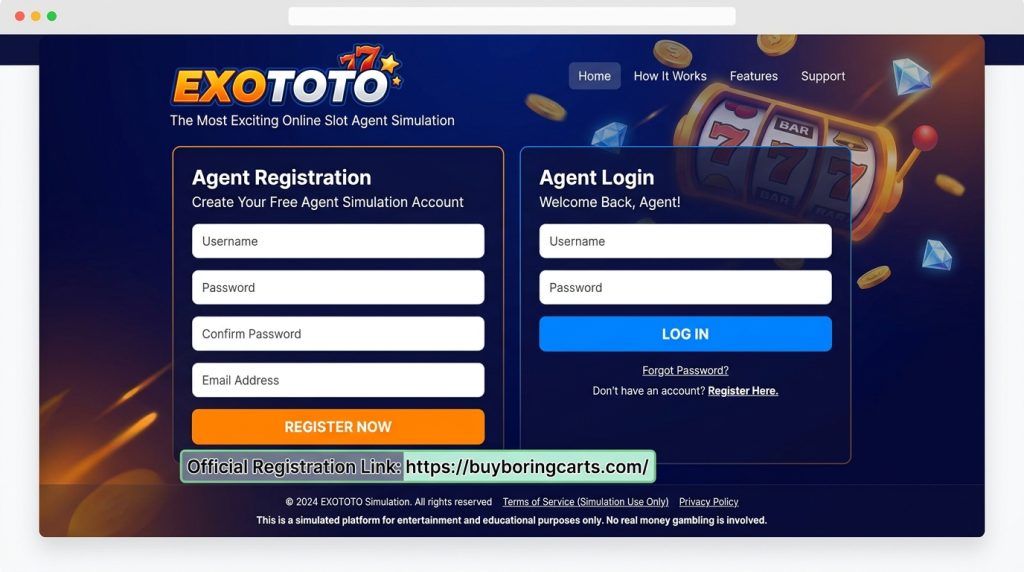
Today’s player demands a transparent, engaging, and structurally flawless environment. As gaming developers utilize modern web capabilities, specialized frameworks are stepping up to deliver. By merging robust registration infrastructure with certified random number distribution, modern systems like the exototo slot simulator offer enthusiasts a detailed, high-performance look into the mechanics of pure probability.
The Foundation: Algorithmic Fairness and Core Mechanics
At the center of any premium slot agent simulation is the engine that handles random number allocation. Physical slots from the previous century relied on internal gear ratios and mechanical brakes to bring reels to a halt. While historically charming, those physical components suffered from operational wear, structural limitations, and predictable cycle frequencies.
Modern slot simulation technology shifts this dynamic entirely into the cloud. Advanced mathematical models utilize pseudo-random number generation algorithms that continuously output numerical sequences at a rate of millions per second. The exact microsecond a user interacts with the digital spin command, the engine captures the active value string and instantly translates it into the graphical layout displayed on the screen. Because each spin functions as a completely isolated statistical event, the integrity of the environment is absolute, ensuring every participant encounters an unmanipulated and cryptographically fair experience.
Navigating the Volatility Curve and Return Metrics
To fully appreciate the design of modern slot agent software, one must look at the two distinct pillars that dictate the user experience: Return to Player (RTP) profiles and variance distributions. These structural choices alter how a game feels, reacts, and sustains user interest over long-term operations.
- Return to Player (RTP) Alignment: This statistical metric represents the theoretical percentage of all cumulative inputs that an engine is programmed to return to users over millions of automated test cycles. Elite digital slot engines are designed with highly optimized RTP rates, usually hovering between 96% and 98%, balancing long-term stability with short-term excitement.
- The Variance and Volatility Continuum: Volatility controls the inherent pacing of the payouts. Low-volatility mathematical models are built to distribute small payouts frequently, creating a smooth, low-risk environment perfect for casual exploration and extended storyline engagement. On the opposite side, high-volatility systems drop payouts far less frequently, but compress the math to allow for rare, massive reward arcs that completely change the dynamic of a session.
By interacting with high-fidelity simulators, players gain an intuitive, hands-on understanding of how these back-end metrics operate, learning how to adapt their pacing and virtual bankroll management to different algorithmic structures.
Optimizing the Front-End Infrastructure
A brilliant back-end mathematical matrix is only as effective as the user interface built on top of it. If an application suffers from sluggish rendering, clunky navigation, or complex entry gates, modern audiences will abandon it for a faster option. For this reason, digital engineers invest heavily in refining the onboarding and navigation architectures.
Modern frameworks leverage lightweight, efficient programming practices to ensure that the initial login and profile registration pathways are completed smoothly. Once verified, users land on an intuitive control panel where they can dynamically adjust game configurations, select their preferred volatility models, and track historical simulation metrics with no visible delay. Full responsive web optimization guarantees that the layout scales fluidly across all devices, maintaining consistent processing speeds and graphical rendering whether accessed from a dual-monitor desktop environment or a smartphone screen during a quick break.
Narrative Layering and Advanced Web Graphics
What truly separates a basic digital calculator from a modern slot agent simulation is the scale of narrative world-building. Traditional static symbols have been replaced by rich, thematic storylines that draw inspiration from historical epics, cinematic science fiction, and neon-lit cyberpunk aesthetics.
These rich visual landscapes rely on web-based rendering solutions like WebGL to compute complex particle effects, dynamic lighting layers, and smooth 3D assets directly within standard internet browsers without requiring bulky plug-ins. When coupled with adaptive sound design—where the musical arrangement shifts in key and intensity based on specific mathematical triggers—the environment transitions from a simple utility into an all-encompassing interactive experience.
The Horizon of Simulated Interactive Systems
As global hosting capabilities become more robust and cross-platform coding languages grow more efficient, the boundaries of the digital slot sector will continue to expand. Future developments are set to incorporate machine learning arrays to adjust interface options dynamically based on play styles, alongside browser-based spatial audio to further mimic the audio environments of major entertainment zones. For the current generation of users, the priority remains fixed on enjoying top-tier server uptime, verified cryptographic mathematics, and the absolute thrill of high-performance digital reels.
