
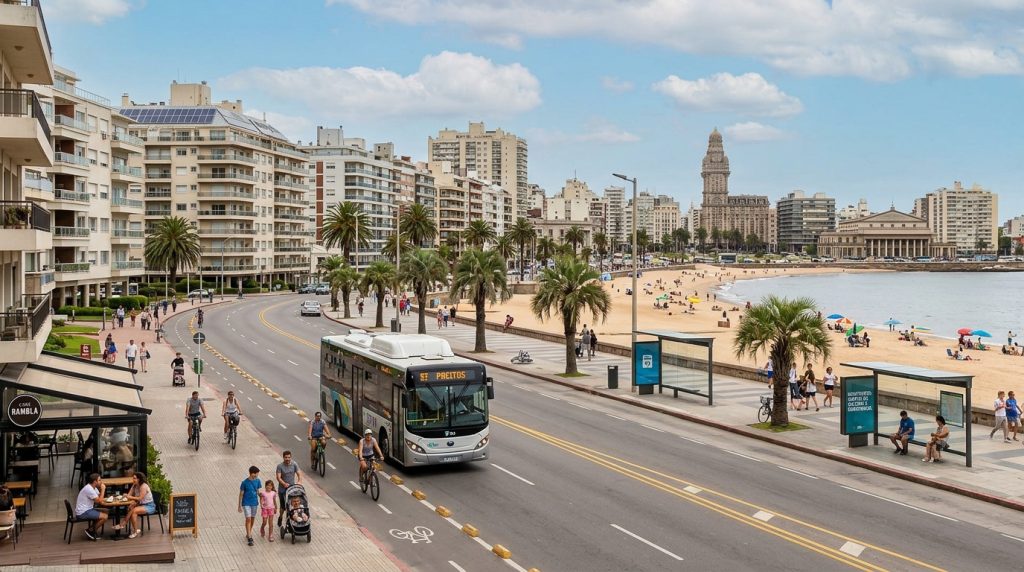
In the heart of the Southern Cone, a city manages to balance the laid-back pace of a seaside town with the sophisticated pulse of a European-influenced capital. Uruguay’s vibrant capital city, Montevideo, has steadily climbed the ranks as one of the most desirable destinations for expats, digital nomads, and travelers looking for a high quality of life without the frantic chaos often found in other South American metropolises.
A Culture Rooted in Community
The soul of this city is found in its streets, where the local culture is a unique tapestry woven from European immigration and deep-seated South American traditions. You will quickly notice that life here does not revolve around the “grind.” Instead, the culture prioritizes community and personal time.
Walking through the neighborhoods of Pocitos or Punta Carretas, you will inevitably see locals carrying their mate kits—the iconic thermos and gourd—ready to share a drink at a moment’s notice. This tradition is more than just a caffeine fix; it is a ritual of friendship and conversation. Whether it is the rhythmic beats of candombe drums echoing through the streets during Carnival or the smell of grass-fed beef grilling on a traditional parrilla, the city offers an authentic sensory experience that is difficult to replicate elsewhere.
The Infrastructure Advantage
One of the primary reasons expatriates choose to settle in this region is the reliability of its infrastructure. Unlike many emerging markets, Uruguay offers a level of development that feels both functional and stable.
- Digital Connectivity: High-speed internet is widely available, making it an excellent hub for remote workers who need consistent connectivity to perform their jobs. Uruguay is consistently ranked among the nations with the fastest mobile internet speeds in the world.
- Safety and Stability: Consistently ranking as one of the safest capitals in Latin America, it provides a sense of security that allows for a relaxed, urban lifestyle.
- Modern Amenities: From efficient public transit to well-maintained healthcare facilities, the daily logistics of living here are remarkably straightforward. Private healthcare, in particular, operates similarly to a membership, providing residents with high-quality, accessible medical care.
The city is currently seeing significant investment in logistics and port modernization, further cementing its position as a regional powerhouse. This commitment to progress ensures that as the population grows, the standard of living remains high.
Life Along the Rambla
No description of this capital would be complete without mentioning the Rambla. Stretching for over 20 kilometers along the Río de la Plata, it is the city’s front porch. It is one of the longest continuous sidewalks in the world and serves as the gathering place for residents.
Whether you are rollerblading at dawn, taking a leisurely stroll with your dog, or watching the sunset turn the river into a shimmering sheet of gold, the Rambla is the heartbeat of the city. It connects the various coastal neighborhoods, offering easy access to sandy beaches that provide a perfect escape from the office or the bustle of downtown.
Why It Attracts Expats
The appeal for those relocating here often comes down to the “Goldilocks” factor—it is just right. It is not so large that it feels anonymous, yet it is not so small that it lacks diversity or entertainment. The city hosts a wide array of international schools, specialized private healthcare networks, and a thriving scene for entrepreneurs.
While the cost of living is competitive, the price of admission buys you safety, stability, and a European-style urban layout. It is a place where you can enjoy a morning meeting at a modern café and spend your afternoon walking through a colonial-era square, all while feeling entirely at home.
For those seeking a move that offers both adventure and peace of mind, this capital stands as a shining example of what sustainable, high-quality urban living looks like in the 21st century.
Are you considering a move to Uruguay, or are you just beginning to explore the potential of living in its capital?
