
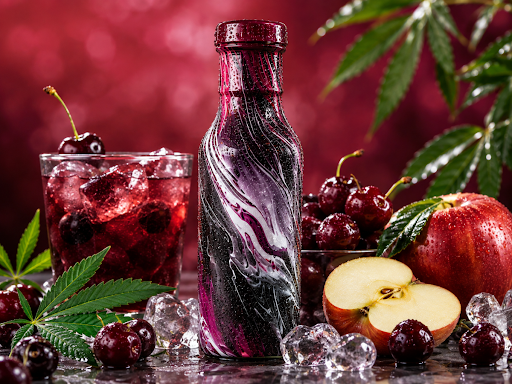
Cannabis-infused beverages have introduced a different way for adults to consume THC without smoking or vaping. They combine familiar beverage formats with cannabinoids, making factors such as serving size, onset time, ingredients, labeling, and storage especially important. Because THC can affect coordination, attention, perception, and decision-making, consumers should understand how these products work before choosing one.
A black cherry apple THC drink combines a fruit-forward beverage profile with hemp-derived THC. The product category is part of a broader market of ready-to-drink cannabis beverages that are designed to provide a measured amount of THC in liquid form. The manufacturer currently describes its Black Cherry Apple product as a hemp-derived THC beverage and states that its products are intended for adults 21 and older.
What Is a Black Cherry Apple THC Drink?
A THC beverage is a drink containing tetrahydrocannabinol, commonly known as THC. THC is the cannabinoid primarily responsible for cannabis’s intoxicating effects. Unlike conventional fruit drinks, a THC-infused beverage can affect the central nervous system and may impair judgment, coordination, reaction time, and perception.
The Black Cherry Apple variety combines two recognizable fruit flavors in a ready-to-drink format. According to the manufacturer’s current product information, the beverage is made with hemp-derived THC and uses a water-soluble formulation designed for rapid absorption.
Consumers should still read the product label carefully because cannabinoid concentration, serving size, ingredients, and applicable warnings can vary between products.
How Do THC Drinks Work?
THC beverages are consumed orally, so their effects differ from inhaled cannabis. After consumption, THC passes through the digestive system before entering the bloodstream.
The timing of effects can vary substantially. The CDC notes that cannabis-infused food and drink products can take approximately 30 minutes to 2 hours to produce noticeable intoxicating effects. The effects may also last longer than consumers expect.
Some beverage manufacturers use water-soluble or nano-emulsion technologies intended to alter how cannabinoids disperse in liquid. The manufacturer of this particular beverage states that its nano-emulsion formulation is designed for faster absorption and reports an onset of approximately 10 to 15 minutes. Individual experiences can differ, so consumers should not treat a manufacturer’s stated onset as a guarantee.
Why Does THC Content Matter?
THC concentration is one of the most important details to check before consuming a cannabis beverage.
A bottle may contain multiple servings, so consumers should distinguish between the amount of THC per serving and the total amount in the container. Reading the entire label can help prevent accidentally consuming more THC than intended.
The CDC warns that the strength of edible cannabis products can sometimes be difficult to determine and may not always correspond accurately with labeling. It also notes that delayed effects can lead people to consume additional amounts before the initial effects become noticeable.
For that reason, consumers should pay attention to serving information and avoid treating a THC beverage like an ordinary soft drink.
What Does the Black Cherry Apple Flavor Offer?
Flavor is an important part of the beverage experience because THC drinks are designed to be consumed similarly to other ready-to-drink products.
Black cherry and apple provide a combination of sweet, tart, and fruit-forward flavor characteristics. A beverage using these flavors may appeal to consumers who prefer fruit-based profiles over citrus, tropical, or berry-focused options.
The current beverage collection lists Black Cherry Apple alongside other flavored THC drinks, including strawberry watermelon, fruit punch, grape, margarita, and blue raspberry.
Flavor preference is subjective, so consumers may want to consider the ingredients and nutritional information alongside taste when comparing different varieties.
Are THC Beverages Different From Other Edibles?
Both drinks and food products containing THC are considered edible cannabis products because they deliver cannabinoids through ingestion.
However, the beverage format can differ from solid foods in terms of formulation and how quickly the product is consumed. A drink can also be easier to portion when the bottle provides clearly defined servings.
The CDC emphasizes that cannabis-infused drinks have some of the same risks as other edible products, including delayed or unpredictable intoxicating effects.
Consumers should therefore avoid assuming that a liquid THC product is automatically weaker or safer than a solid edible.
What Should You Check on the Label?
A responsible purchasing decision starts with the label. Important information may include:
- THC amount per serving
- Total THC per container
- Serving size
- Ingredient list
- Cannabinoid information
- Manufacturer information
- Recommended storage conditions
- Required warnings
- Age restrictions
- Laboratory testing information, where applicable
Clear labeling is especially important because THC drinks can resemble ordinary beverages.
The manufacturer states that its THC products are third-party lab tested for purity and potency. Consumers can review available testing documentation when provided and should understand which compounds and contaminants the laboratory report actually measures.
Are THC Beverages Legal Everywhere?
No. Laws governing cannabis and hemp-derived THC products differ by jurisdiction and can change over time.
A product’s availability online does not necessarily mean it can legally be purchased, possessed, or shipped everywhere. Consumers should verify the rules applicable to their location before purchasing or consuming a THC beverage.
Federal regulation is also an important consideration. The FDA states that it continues to evaluate the science, safety, and regulatory status of cannabis-derived products and has taken enforcement action involving certain cannabis-derived products.
Therefore, consumers should not rely solely on marketing descriptions when determining whether a product is appropriate or lawful in their location.
Can THC Drinks Affect Driving?
Yes. THC can impair skills that are important for safe driving.
The CDC states that cannabis can slow reaction time and decision-making ability, impair coordination, and distort perception. Using cannabis with alcohol or other substances can increase impairment.
For this reason, anyone who consumes an intoxicating THC beverage should not drive or operate machinery while impaired. The manufacturer’s own product information also warns consumers not to drive or operate heavy machinery after using its THC products.
Planning transportation in advance is a practical safety measure when consuming an intoxicating cannabis product.
How Should THC Drinks Be Stored?
Storage deserves particular attention because a THC beverage may look similar to a conventional drink.
THC-containing products should be kept away from children and pets and stored according to the manufacturer’s instructions. The CDC recommends keeping cannabis products in a locked, childproof container and out of the reach and sight of children and pets.
Keeping the product in its original labeled packaging can also reduce the risk of someone mistakenly treating it as an ordinary beverage.
Who Should Be Particularly Cautious?
People who are pregnant or breastfeeding, taking medications, managing a medical condition, or uncertain about potential cannabis interactions should speak with an appropriate healthcare professional before consuming THC products.
Individual responses can vary according to factors such as previous cannabis exposure, biology, THC concentration, consumption method, and whether other substances are used at the same time.
People who have never used THC before should be particularly careful about understanding the product’s serving information and potential effects.
What Makes a Quality THC Beverage Worth Considering?
A responsible evaluation should go beyond flavor and packaging.
Consumers can look for transparent labeling, clearly stated cannabinoid amounts, accessible ingredient information, appropriate warnings, and laboratory testing information where applicable. Consistent manufacturing and traceability can also be useful indicators when comparing products.
The FDA has emphasized that questions remain about the safety and quality of many cannabis-derived products, while its warning-letter database demonstrates that regulatory concerns continue to arise in this product category.
That makes product transparency an important consideration when evaluating cannabis beverages.
Conclusion
A black cherry apple THC drink combines a fruit-based flavor profile with hemp-derived THC in a ready-to-drink format. Its beverage form may be convenient, but consumers should remember that THC drinks are intoxicating products rather than ordinary refreshments. Understanding the serving size, THC concentration, ingredients, expected effects, and applicable laws is essential before consumption. More broadly, THC beverages can differ in formulation, onset, potency, and serving size, so consumers should evaluate each product individually rather than assuming that all cannabis drinks work in the same way. The CDC specifically warns that edible cannabis products can have delayed and longer-lasting effects, which increases the risk of accidental overconsumption.
